Your Survey Says \"Rising Damp\" — here's what it actually means, and why it's often less serious than it sounds
Worried about what your survey means?
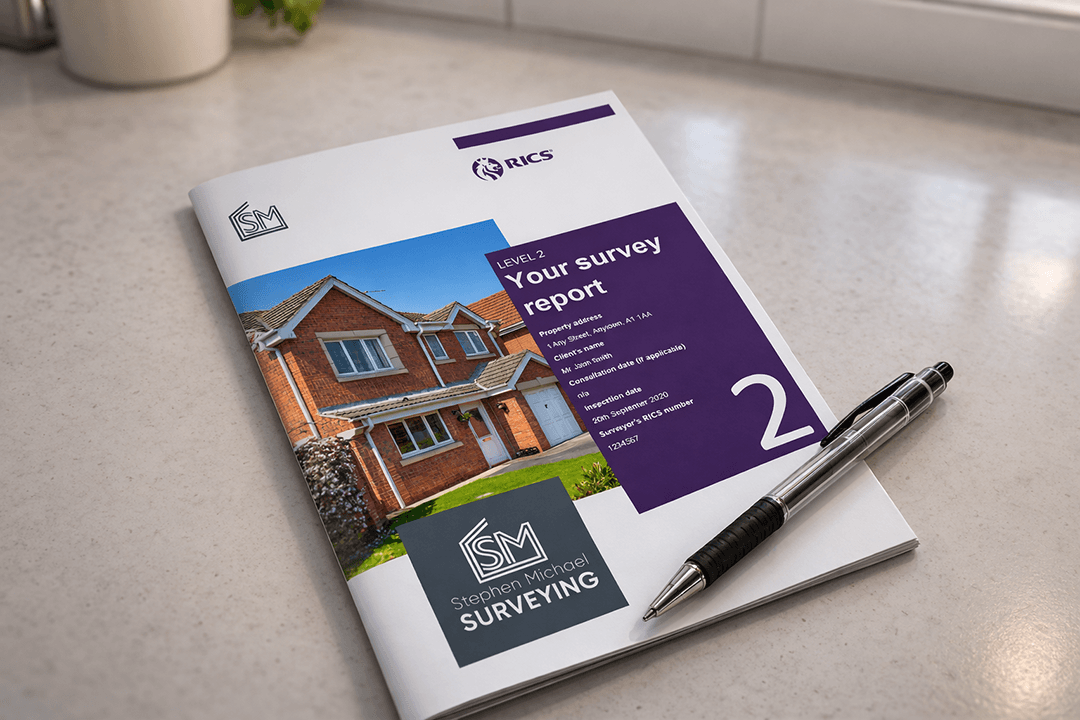
Send me your survey and I'll read it personally. Within 24 hours you'll have a plain-English review of what it really means:
What's serious
What's normal for a house this age
What to do next
From a builder, not a surveyor. Nothing to sell you but the truth.
A plain-English explanation from a builder with 20+ years on houses like yours — not a surveyor, and with no repair work to sell you.
You've just had the survey back, and your stomach dropped
You found a house you liked enough to make an offer on.
The offer was accepted.
You paid — probably several hundred pounds — for a survey, expecting it to reassure you.
Instead, it came back mentioning rising damp, or "high damp-meter readings," maybe alongside a recommendation to get a "specialist damp survey."
Suddenly the house you loved sounds like it needs thousands spending on it.
Take a breath.
Of all the things a survey can flag, rising damp is one of the most over-diagnosed — and one of the most worth understanding properly before you spend a penny.
Why surveys are written to sound worse than the house actually is
A surveyor's job is to flag anything that could possibly be a concern, and to protect themselves from ever being blamed for missing something.
So survey reports read like a list of disasters even on perfectly ordinary homes — written cautiously on purpose, not to tell you whether to buy, but to make sure the surveyor can never be held responsible later.
With damp specifically, there's an extra layer: the surveyor usually checks it with a handheld damp meter and, when in doubt, recommends a "specialist" investigation.
That sounds prudent.
But as you'll see, both the meter and the "specialist" deserve a closer look before you panic.
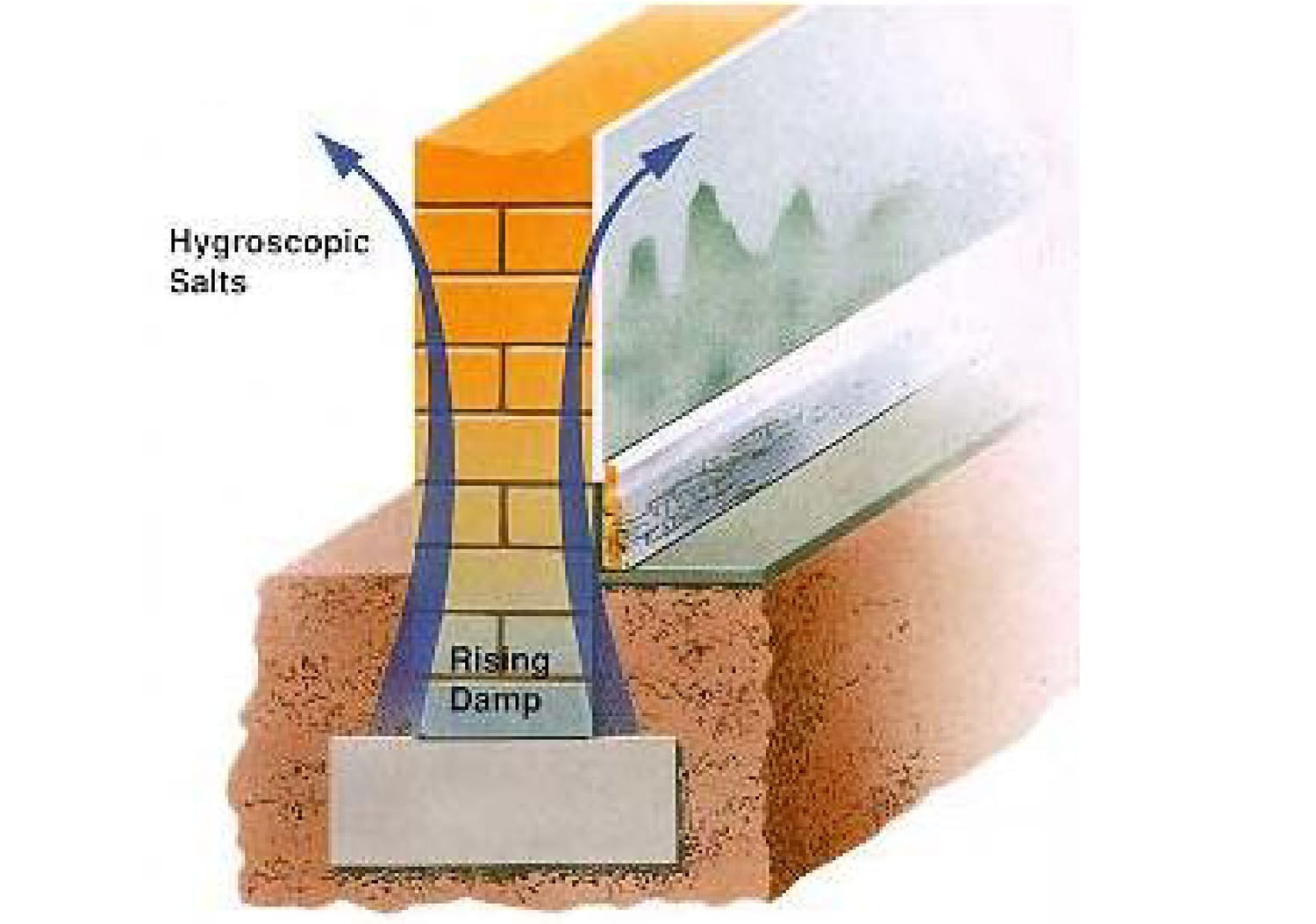
What "rising damp" actually is — in plain terms
Rising damp means ground moisture being drawn up through the wall from below, past or through a failed damp-proof course.
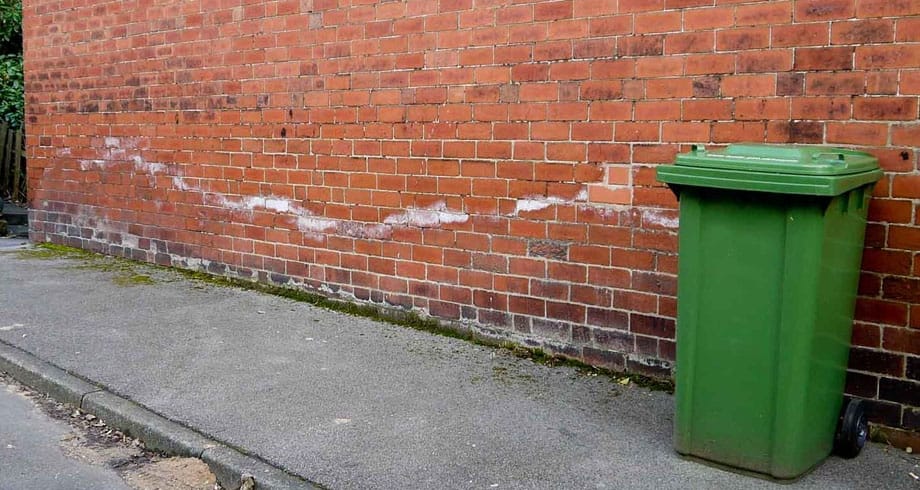
It usually shows as a tide-mark a metre or so up the wall, with the damp worse at the bottom.
Here's the part the report rarely makes clear: genuine rising damp is far rarer than surveys suggest.
Most older houses have a damp-proof course (slate, bitumen, or a later injected one), and true, widespread rising damp — the kind needing a new chemical DPC and replastering — is the exception, not the rule.
What's much more common is damp that gets blamed on "rising" when it's actually something else and cheaper:
Condensation from poor ventilation (very common, and a lifestyle/ventilation fix, not a structural one)
High external ground levels bridging the damp-proof course — often fixed by lowering a path or flower bed
Penetrating damp from a gutter or pointing issue (covered on its own page)
Salts in old plaster holding moisture and fooling the meter
So a "rising damp" note often turns out to be one of these — and the cure is far cheaper than the words suggest.
The damp meter problem (the bit nobody tells you)
This matters, so it's worth being clear: handheld damp meters are notoriously unreliable on masonry.
They're designed to measure moisture in timber, and on a solid old wall they routinely read "damp" on walls that are perfectly sound — set off by salts, surface conditions, or simply the density of old stone and brick.
That means a "high damp-meter reading" on a survey is a prompt to look closer — not proof of rising damp. A reading on its own diagnoses nothing.
And here's where to be especially careful: when a survey says "get a specialist damp survey," that specialist is very often a damp-proofing company — a firm that makes its money selling and installing the treatment.
A "free damp survey" from a company that profits from the cure is not an impartial opinion.
They have every reason to find an expensive problem.
So before you accept a five-figure quote for a new chemical DPC and replastering, it's worth getting a genuinely impartial read on whether you need any of it.
So why do the costs you've seen online look so frightening?
Because the figures floating around — £3,000, £5,000, £10,000 and up — are for the full treatment: injected damp-proof course, hacking off and replastering whole walls, redecoration.
That's the worst case, and the case the damp industry is keenest to sell.
The far more common reality is something much smaller: improving ventilation, lowering a path that's bridging the DPC, fixing a gutter, or simply monitoring a reading that turns out to be salts in old plaster — often a few hundred pounds, sometimes nothing at all.
The trouble is, from where you're sitting, you can't tell which version your house is.
Is it the £200 ventilation-and-ground-levels fix, or the genuine £8,000 DPC job? That's the question that actually matters — and it's the one thing a webpage can't answer for you, because it depends entirely on what's going on at your specific property.
The 3 things you actually need to know right now
Your survey almost certainly hasn't told you these clearly:
1 - Is it actually rising damp — or condensation, ground levels, or salts fooling the meter?
2 - How urgent is it? Does it need doing now, or is it something you manage over time?
3 - What will it realistically cost? Not the damp company's scare quote — the honest, likely number.
Here's the frustrating bit: the people around you can't fill these gaps.
Your surveyor won't commit — a meter reading and a "get a specialist" note is as far as they'll go.
Your conveyancer can't help — building condition isn't their area.
A damp-proofing "specialist" isn't impartial — they sell the treatment, so the problem rarely shrinks in their telling.
You're left with a frightening reading and no one whose only interest is telling you the truth.
Not sure whether it's real rising damp or something cheaper?


That's exactly what I'll tell you.
I'm Fran Mickelborough, a builder with over 20 years on houses exactly like the one you're buying.
I'm not a surveyor, and I have no repair work to sell you — and crucially, I'm not a damp-proofing company, so I've no reason to find you a problem that isn't there.
Send me your survey and I'll read it personally.
Within 24 hours you'll have a plain-English review of what its findings really mean for your house:
Whether it's likely genuine rising damp or one of the cheaper, more common culprits
How urgent it is
What the realistic cost is — before anyone sells you a DPC you might not need
Within 24 hours. From a builder, not a surveyor. Just the truth.
You've already spent hundreds on the survey, with tens of thousands riding on the decision. This is £29.
A quick honest note about damp specifically
Most of the time, a survey review tells you everything you need.
But damp is occasionally one of those things I genuinely can't call from the document alone — whether yours is condensation, bridged ground levels, or the rarer genuine rising damp sometimes depends on seeing it.
If that's the case with yours, I'll tell you honestly, and there's the option of a quick video walkthrough where I look at it with you.
But the review is the place to start — and for most surveys, it's all you'll need.
What other buyers have said
"The survey said rising damp and quoted a damp firm. Fran looked at it and said it was almost certainly ventilation and ground levels — saved us thousands and a lot of stress." — Hannah S, Bamford
"I was about to pay £6,000 for a new damp course I didn't need. So glad I got an impartial read first." — Paul W, Eccleshall
Most of the time, the house you fell in love with is fine
You just need someone honest to tell you so — someone who's seen this a hundred times, has nothing to sell you (and no damp course to install), and will give it to you straight.
Plain English · within 24 hours · just the truth
Not had your survey done yet?
Grab the free Survey Decoder first — a plain-English guide to reading your survey without panicking, so you're ready when it lands.
Common questions about rising damp in surveys
Does a high damp-meter reading mean the house has rising damp?
No. Handheld meters are unreliable on masonry and routinely read "damp" on perfectly sound walls — set off by salts, surface conditions, or the density of old stone and brick.
A reading is a prompt to look closer, not a diagnosis.
Should I get the "specialist damp survey" my report recommended?
Be careful who you get it from. Many "specialists" are damp-proofing companies that profit from selling the treatment — so a "free" survey isn't impartial.
It's worth getting a genuinely independent read first on whether you need any work at all.
Related survey concerns buyers also search for
You may also find these helpful if your survey has raised other concerns:
Worried about what your survey means?
Send me your survey and I'll read it personally.
Within 24 hours you'll have a plain-English review of what it really means —
What's serious
What's normal for a house this age
What to do next
From a builder, not a surveyor. Nothing to sell you but the truth.

A practical builder's interpretation of your survey.
Not a formal survey, structural engineer's report, or contractor quotation
© 2026 SurveyCheck.uk | All Rights Reserved