Your Survey Mentions \"Movement\" or Possible Subsidence — here's how worried you should actually be
Worried about what your survey means?

Send me your survey and I'll read it personally. Within 24 hours you'll have a plain-English review of what it really means:
What's serious
What's normal for a house this age
What to do next
From a builder, not a surveyor. Nothing to sell you but the truth.
A plain-English explanation from a builder with 20+ years on houses like yours — not a surveyor, and with no repair work to sell you.
You've just had the survey back, and your stomach dropped
You found a house you liked enough to make an offer on. The offer was accepted.
You paid — probably several hundred pounds — for a survey, expecting it to reassure you.
Instead, it mentioned movement, or cracks, or — the word that really makes the heart sink — possible subsidence.
Suddenly you're wondering whether the house is falling down, whether your mortgage is at risk, and whether you should run.
Take a breath...
Movement is one of the scariest things a survey can flag — and also one of the most misunderstood.
In most older houses, it's old, settled, and harmless.
Occasionally it's genuinely worth attention.
The whole game is telling which is which — and this page will help with that.
Why surveys are written to sound worse than the house actually is
A surveyor's job is to flag anything that could possibly be a concern, and to protect themselves from ever being blamed for missing something.
Movement is the area where this caution is at its most extreme — because if a surveyor under-calls subsidence and they're wrong, the liability is enormous.
So when a surveyor sees cracking, they will almost always note it and very often add "further investigation recommended" or "a structural engineer should advise."
That isn't necessarily because they think the house is moving now.
It's because they can't rule it out from a single visual inspection, and the safe move — for them — is to flag it.
That caution is sensible.
But it means "movement noted" lands in your inbox sounding far more alarming than the bricks usually justify.
What "movement" actually means — in plain terms
Almost every older building has moved.
Houses settle over their lifetime — the ground beneath them shifts slightly, materials expand and contract through a century of seasons, and the structure finds its position.
This is completely normal and, in the vast majority of cases, finished long ago.
That's why the most reassuring word in your survey is often "historic."
"Historic movement" means it happened in the past and has stopped — old settlement that has long since stabilised.
Tell-tale signs of the harmless kind:
Hairline cracks that are old and unchanging
Slightly out-of-square door frames (extremely common in old houses)
Sloping floors typical of the age and type
Cracks that have been there, unchanged, for years
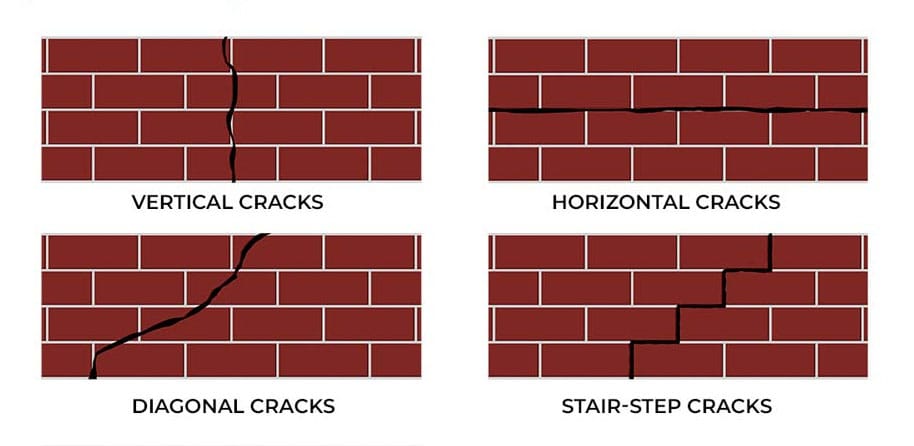
The genuinely concerning kind is active, ongoing movement — and it tends to look different:
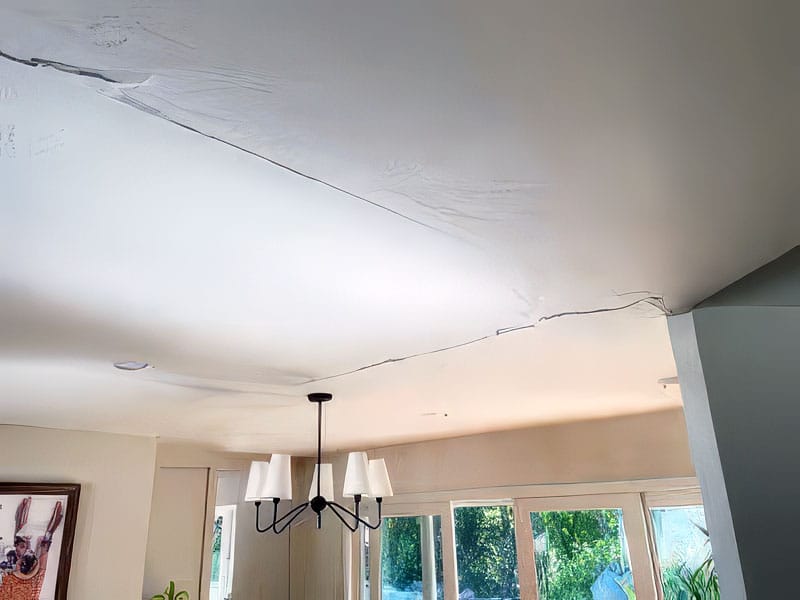
Cracks that are recent and widening
Wider cracks (a few millimetres or more), often diagonal or stepped through the brickwork
Cracks wider at the top than the bottom, or vice versa
Cracking concentrated near an extension join, a tree, or a bay window
Doors and windows that have recently started sticking
The difference between "the house settled eighty years ago" and "the house is moving now" is the entire question.
And — being straight with you — it's not always one a document alone can answer.
So why do the costs and worst-case stories sound so frightening?
Because the word "subsidence" carries the heaviest baggage of anything in a survey — underpinning, insurance complications, tens of thousands of pounds, difficulty reselling.
Those cases are real, but they are the minority of movement flagged on surveys, by a wide margin.
The far more common reality: old, stable settlement that needs nothing more than monitoring, or a bit of cosmetic crack-filling.
No underpinning, no engineer, no drama — just a house being a hundred years old.
The trouble is, from where you're sitting, you can't tell which version your house is.
Is it harmless historic settlement, or the rare active case that genuinely needs a structural engineer?
That's the question that actually matters — and with movement especially, it's the one a webpage can't answer for you, because it depends entirely on the specific cracks at your specific property.
The 3 things you actually need to know right now
Your survey almost certainly hasn't told you these clearly:
Is it active or historic? Old settled movement, or something happening now? This is the whole question.
How urgent is it? Does it need attention now, monitoring, or nothing at all?
What's the realistic next step and cost? A bit of filling, a period of monitoring, or — genuinely occasionally — a structural engineer?
Here's the frustrating bit: the people around you can't fill these gaps.
Your surveyor won't commit — flagging it and saying "get an engineer" covers their liability, but doesn't tell you whether you actually need one.
Your conveyancer can't help — building condition isn't their area.
A builder quoting for the work isn't impartial — they want the job.
You're left with a frightening word and no one whose only interest is telling you the truth.
Not sure whether your cracks are old and harmless or something live?


That's exactly what I'll help you work out.
I'm Fran Mickelborough, a builder with over 20 years on houses exactly like the one you're buying.
I've seen a great deal of movement in real houses — and learned to tell the everyday settlement of an old building from the small number of cases that genuinely warrant concern.
I'm not a surveyor, and I have no repair work to sell you — so I've no reason to make your cracks sound better or worse than they are.
Send me your survey and I'll read it personally.
Within 24 hours you'll have a plain-English review of what its findings really mean for your house:
Whether the movement described sounds historic and harmless, or worth a closer look
How urgent it is
What the realistic next step and cost likely are
Within 24 hours. From a builder, not a surveyor. Just the truth.
You've already spent hundreds on the survey, with tens of thousands riding on the decision. This is £29.
An honest note about movement specifically
I'll be straight with you, because movement matters more than most things on a survey.
Most of the time, a review of your survey tells you what you need — and most movement turns out to be old, settled, and harmless.
But movement is the area where I'm most likely to say one of two things honestly:
either "this would really benefit from eyes on the actual cracks," in which case there's the option of a video walkthrough where I look at them with you —
or, in the small number of genuinely concerning cases, "this needs a structural engineer, here's what to ask them and roughly what it costs."
That honesty is the service.
I will never wave away something that might be serious to make a sale — and I'll never inflate harmless settlement into a crisis either.
The review is the place to start, and it'll tell you clearly which of those situations you're in.
What other buyers have said
"The survey said possible subsidence and we nearly pulled out. Fran explained it was classic old settlement, long since stopped — we bought the house and it's been perfect." — Niamh L, Sheffield
"Honest from start to finish. He told me one crack was nothing, and another was worth an engineer's look — exactly the clarity I needed before committing." — Ian C, Loughborough
Most of the time, the house you fell in love with is fine
Old houses move, settle, and stop.
You just need someone honest to tell you whether yours is the harmless kind — and to be straight with you on the rare occasion it isn't.
Plain English · within 24 hours · just the truth
Not had your survey done yet?
Grab the free Survey Decoder first — a plain-English guide to reading your survey without panicking, so you're ready when it lands.

Common questions about movement issues in surveys
Does "movement" in a survey mean subsidence?
Usually not.
Almost every older house has moved and settled over its lifetime, and most of that movement is historic — it happened long ago and has stopped.
Active subsidence is the rare exception, not the rule.
My survey says to get a structural engineer. Do I have to?
Sometimes genuinely yes — and sometimes that's the surveyor covering their liability rather than a sign of a real problem.
An impartial review of your survey first will tell you whether an engineer is genuinely warranted, so you don't pay for one you don't need (or skip one you do).
Related survey concerns buyers often search for
You may also find these helpful if your survey has raised other concerns:
Worried about what your survey means?
Send me your survey and I'll read it personally.
Within 24 hours you'll have a plain-English review of what it really means —
What's serious
What's normal for a house this age
What to do next
From a builder, not a surveyor. Nothing to sell you but the truth.

A practical builder's interpretation of your survey.
Not a formal survey, structural engineer's report, or contractor quotation
© 2026 SurveyCheck.uk | All Rights Reserved