Your survey says \"further investigation recommended\" — here's what it actually means (and why it's usually nothing to panic about)
Worried about what your survey means?
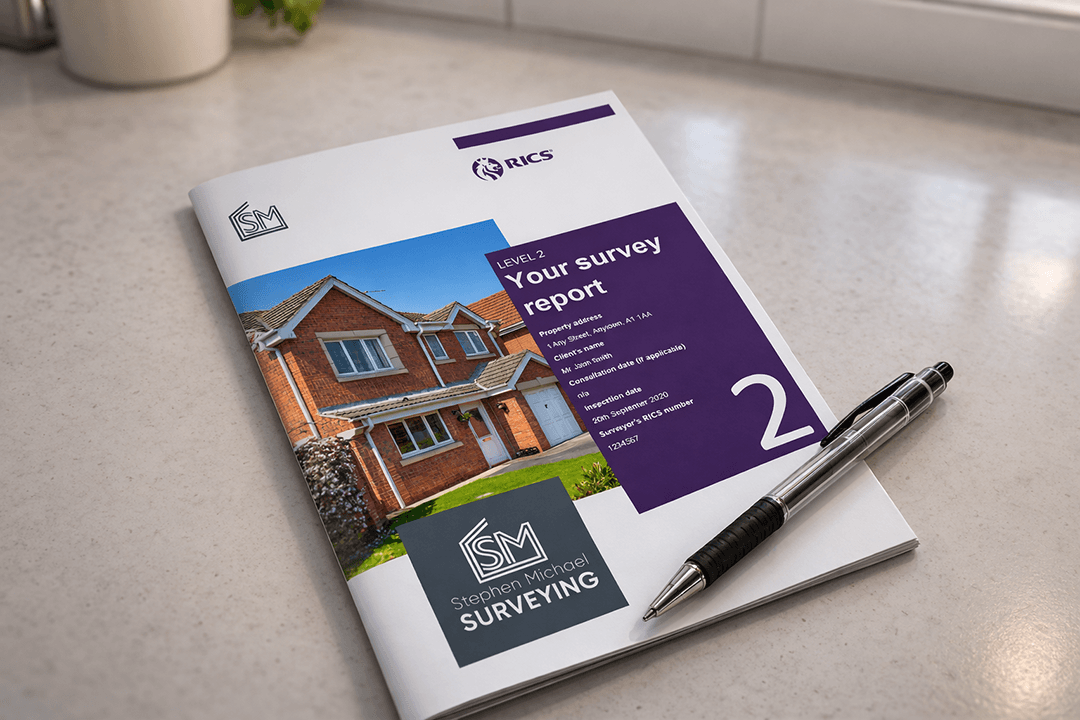
Send me your survey and I'll read it personally. Within 24 hours you'll have a plain-English review of what it really means:
What's serious
What's normal for a house this age
What to do next
From a builder, not a surveyor. Nothing to sell you but the truth.
A plain-English explanation from a builder with 20+ years on houses like yours — not a surveyor, and with no repair work to sell you.
You've just had the survey back, and it's peppered with the same worrying phrase
You found a house you liked enough to make an offer on.
The offer was accepted.
You paid — probably several hundred pounds — for a survey, expecting it to reassure you.
Instead, the report keeps saying "further investigation recommended."
Sometimes once, sometimes a dozen times — against the roof, the damp, the wiring, the drains, the walls.
Each one reads like a warning, and together they make the house sound like it's riddled with problems.
Take a breath.
This is the single most misunderstood phrase in any survey — and once you understand what it really means, a lot of that fear simply evaporates.
Why surveys are written to sound worse than the house actually is
A surveyor's job is to flag anything that could possibly be a concern, and to protect themselves from ever being blamed for missing something.
"Further investigation recommended" is the purest expression of that caution — it's the phrase a surveyor reaches for whenever they can't be 100% certain about something from a visual inspection.
And here's the key: they can't be certain about a lot, because a survey is, by definition, a visual inspection.
They don't lift floorboards, open up walls, test the wiring, or dig up drains.
So any time something is hidden, partially obscured, or simply beyond what a visual check can confirm, the safe move — for them — is to recommend further investigation.
It isn't a verdict that something is wrong.
It's the surveyor saying, "I couldn't fully see or test this, so I'm covering myself by flagging it."
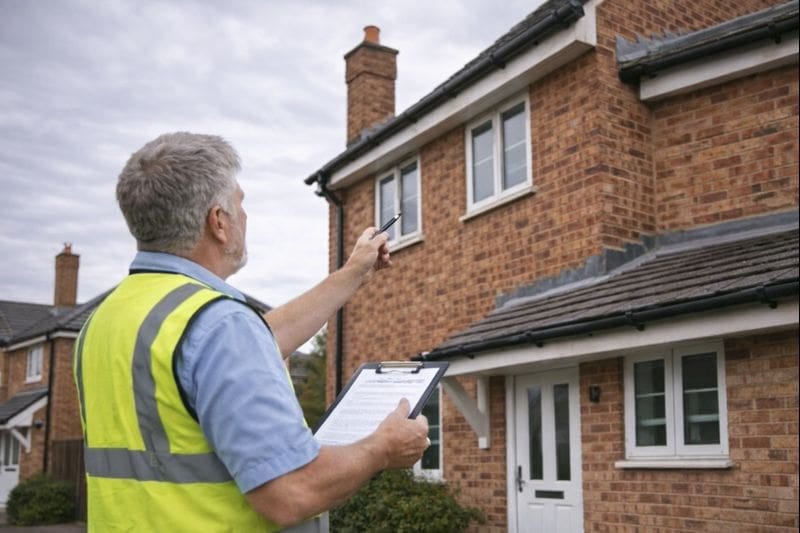
What "further investigation recommended" actually means — in plain terms
Strip away the alarm and the phrase means one of these things, almost every time:
"I couldn't see it properly." The loft was boarded, the wall was panelled, furniture was in the way, the drain cover was rusted shut. Common, and says nothing about the condition of what's hidden.
"It's not my area to test." Wiring, gas, drains, boilers — a surveyor flags these and tells you to get the relevant qualified person, because testing them isn't part of a survey. Standard practice on virtually every house.
"I want to be cautious about this one." They've seen something — a bit of damp, a hairline crack — that's probably nothing, but they'd rather you confirmed it than risk being blamed later.
Notice what none of these mean: "this house has a serious problem."
The phrase is a question, not a diagnosis.
It's the surveyor pointing and saying "look a bit closer here" — and most of the time, the closer look turns up nothing dramatic.
That's the honest builder's view: "further investigation recommended" is, far more often than not, caution wearing the costume of a warning.
So why does it feel so alarming?
Because it appears so often, and each instance reads like a separate red flag.
A survey with ten "further investigation recommended" notes feels like ten problems — when in reality it's usually a surveyor methodically covering every item they couldn't personally test or fully see.
The mistake almost everyone makes is reacting to the number of these notes.
A report can be peppered with them and still describe a thoroughly sound house.
What matters isn't how many times the phrase appears — it's which one or two of those flags, if any, point at something that actually deserves your money and attention.
The trouble is, from where you're sitting, you can't tell the routine "I couldn't test the wiring" note from the rare "this genuinely needs looking at" one.
They're written in identical language.
That's the question that actually matters — sorting the noise from the substance — and it's exactly what a survey is not designed to do for you.
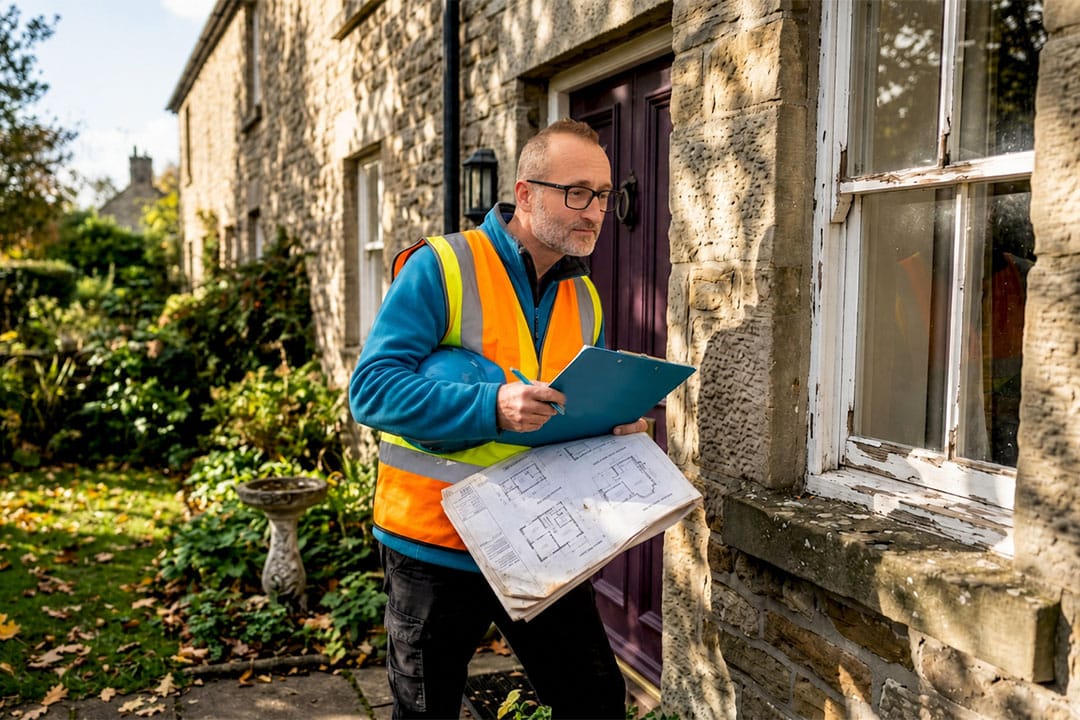
The 3 things you actually need to know right now
Your survey almost certainly hasn't told you these clearly:
1 - Which of these notes are just routine caution — the standard "couldn't test it / couldn't see it" flags that appear on every house?
2 - Which one or two, if any, actually matter — and genuinely deserve a closer look before you commit?
3 - What's the realistic next step for each — nothing, a quick check by the right tradesperson, or a proper specialist?
Here's the frustrating bit: the people around you can't fill these gaps.
Your surveyor won't sort them for you — flagging everything and saying "investigate" is the caution; ranking them by what really matters isn't what the report does.
Your conveyancer can't help — building condition isn't their area.
A builder quoting for the work isn't impartial — they want the job.
You're left with a report full of identical-sounding warnings and no one whose only interest is telling you which ones to ignore.
Want to know which of those flags actually matter?


That's exactly what I do.
I'm Fran Mickelborough, a builder with over 20 years on houses exactly like the one you're buying.
I read these reports for a living and I know the difference between the surveyor's routine caution and the rare flag that genuinely deserves attention.
I'm not a surveyor, and I have no repair work to sell you — so I've no reason to make any of it sound worse than it is.
Send me your survey and I'll read it personally.
Within 24 hours you'll have a plain-English review of what its findings really mean for your house:
Which "further investigation" notes are just standard caution you can set aside
Which one or two, if any, genuinely matter
What the realistic next step is for each — and what it's likely to cost
Within 24 hours. From a builder, not a surveyor. Just the truth.
You've already spent hundreds on the survey, with tens of thousands riding on the decision. This is £29.
A quick honest note
Most of the time, a review of your survey tells you everything you need — and with "further investigation" notes especially, that's usually the whole job: sorting the routine caution from the rare thing that matters, in plain English.
Just occasionally, one of those flags points at something I'd want to see properly — and if so, I'll tell you honestly, and there's the option of a video walkthrough where I look at it with you.
But the review is the place to start, and for most surveys it's all you'll need.
What other buyers have said
"My survey said 'further investigation recommended' about fifteen times and I was in a complete panic. Fran went through every one — fourteen were nothing, one was worth a quick check. The relief was enormous." —Faye L, Barnsley
"Turned a terrifying report into a simple list of what mattered and what didn't. Exactly what I needed before exchanging." — Marcus P, Holmefirth
Most of the time, the house you fell in love with is fine
A report full of "further investigation recommended" usually means a careful surveyor, not a bad house.
You just need someone honest to tell you which flags to ignore — and which, if any, to act on.
Plain English · within 24 hours · just the truth
Not had your survey done yet?
Grab the free Survey Decoder first — a plain-English guide to reading your survey without panicking, so you're ready when it lands.
Grab the free Survey Decoder first — a plain-English guide to reading your survey without panicking, so you're ready when it lands.
Related issues buyers also search for
Does "further investigation recommended" mean there's a problem?
Usually not. It most often means the surveyor couldn't fully see or test something (a boarded loft, the wiring, the drains) and is flagging it out of caution.
It's a prompt to look closer, not a diagnosis — and the closer look usually turns up nothing dramatic.
Do I have to investigate everything the survey flags?
No — and trying to would cost a fortune.
Most of these notes are routine caution that appear on every house.
The skill is telling the routine ones from the rare flag that genuinely matters, so you only spend time and money where it counts.
Related issues buyers also search for
You may also find these helpful if your survey has raised other concerns:
Worried about what your survey means?
Send me your survey and I'll read it personally.
Within 24 hours you'll have a plain-English review of what it really means —
What's serious
What's normal for a house this age
What to do next
From a builder, not a surveyor. Nothing to sell you but the truth.

A practical builder's interpretation of your survey.
Not a formal survey, structural engineer's report, or contractor quotation
© 2026 SurveyCheck.uk | All Rights Reserved